
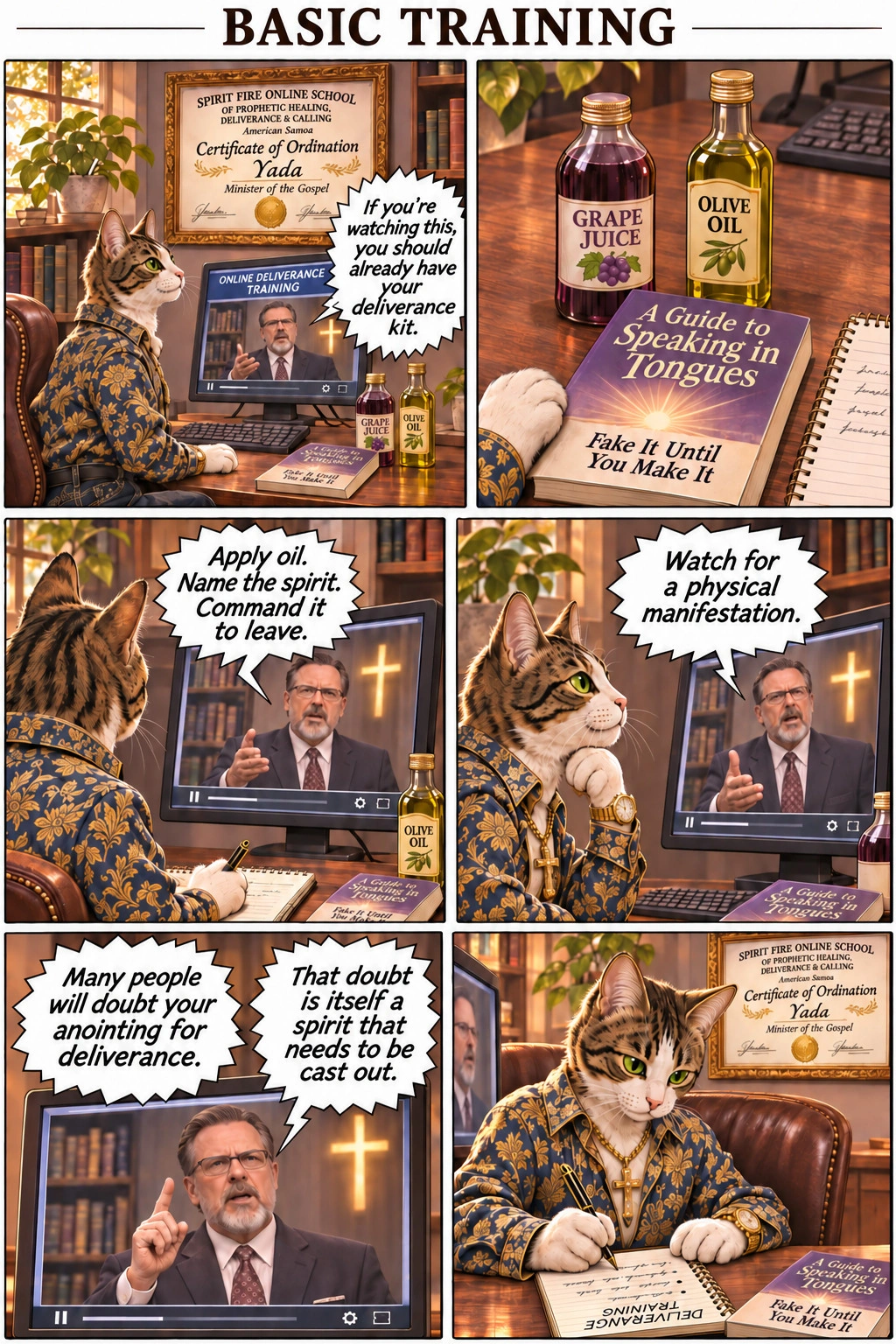
Basic Training
Religious instruction must be examined. A claim to spiritual authority does not make examination disobedient, and a teacher's confidence does not make his explanation true. Christians remain responsible for what they receive and practice, including when the person offering the instruction insists that questioning him is spiritually dangerous.
First Thessalonians 5:19–22 is sometimes used to discourage scrutiny. Paul tells believers not to quench the Spirit and not to despise prophecies. But the same instruction immediately requires testing everything, holding firmly to what is good, and abstaining from evil. The passage does not require indiscriminate acceptance. Discernment is part of the response Paul commands.
Testing must have a standard beyond the person making the claim. Otherwise the process is circular: we are told to trust the teacher because he has authority, and told that he has authority because he says so. A title, testimony, course certificate, or dramatic presentation may describe the messenger. None establishes that a particular teaching agrees with God's word.
Acts 17:10–12 describes the Bereans receiving Paul's message eagerly and examining the Scriptures daily to determine whether it was true. Eagerness and investigation appear together. They are willing to hear the argument and willing to check it. Paul is explaining the fulfillment of the Scriptures in Christ; their examination concerns the actual grounds of his message rather than their immediate emotional response to him.
A useful examination begins with a clear statement of the claim. What exactly is the teacher saying? Which passage supports it? What does that passage address, and how does its argument establish the proposed practice? If the explanation depends on moving from one isolated phrase to another, read the surrounding passages before accepting the connection. A chain of references can look substantial while each link is being used outside its context.
First John 4:1 also tells believers to test spirits rather than believe every spirit. John gives the presence of false prophets as the reason. The possibility of deception increases the need for examination; it does not authorize the first confident person to identify all disagreement with him as deception. The teacher's own message remains among the claims that need testing.
This becomes especially important when an objection is reclassified as a spiritual disorder. If asking where a teaching comes from is called rebellion, fear, or a demon, the original question has still not been answered. The accusation changes the cost of asking. It can make a student afraid to investigate without providing any additional reason to believe the lesson.
Scripture also directs how teaching should respond to opposition. Second Timothy 2:24–26 describes the Lord's servant as gentle, able to teach, patient, and correcting opponents with gentleness. An explanation may need to be firm, but firmness should communicate truth. It should not become a method of making the teacher impossible to question.
Galatians 1:6–9 makes the priority of the message over the messenger especially clear. Paul says that even he or an angel from heaven must be rejected if the message contradicts the gospel already preached. The argument leaves no room for a claim of extraordinary status to become its own exemption. The authority of a messenger cannot authorize another gospel. A dramatic origin story therefore needs the same substantive examination as an ordinary claim made across a kitchen table.
The ability to test teaching improves when we slow the process down. Write the claim in ordinary language. Read the whole passage offered in support of it, including the words that identify who is addressed. Ask whether the text describes a particular event, issues an instruction, or states a promise. Those functions cannot be exchanged without an argument. An account of something God did once does not automatically become a procedure every believer is commanded to perform.
Sometimes a teacher responds by multiplying references faster than anyone can examine them. There is no requirement to accept the conclusion at the pace of the presentation. Choose one passage and work through it. If it does not establish the claim, say what remains unproved. The goal is understanding, and understanding can require a slower conversation than a persuasive performance allows. A student who takes time to investigate is doing something Scripture commends.
Students must do their part honestly. Testing is not the search for a convenient excuse to reject an unwelcome command. We should represent the claim accurately, consider the evidence, and accept what proves true even when it requires us to change. The same standard applies when the teaching came from a trusted friend or from our own earlier notes.
Teachers serve that process by making their reasoning visible. Read the text with the student, explain the connection, and acknowledge where the claim exceeds what can be demonstrated. A sound lesson can bear examination. When a claim fails it, hold firmly to what is good and leave the unsupported claim behind.